

Quick answer
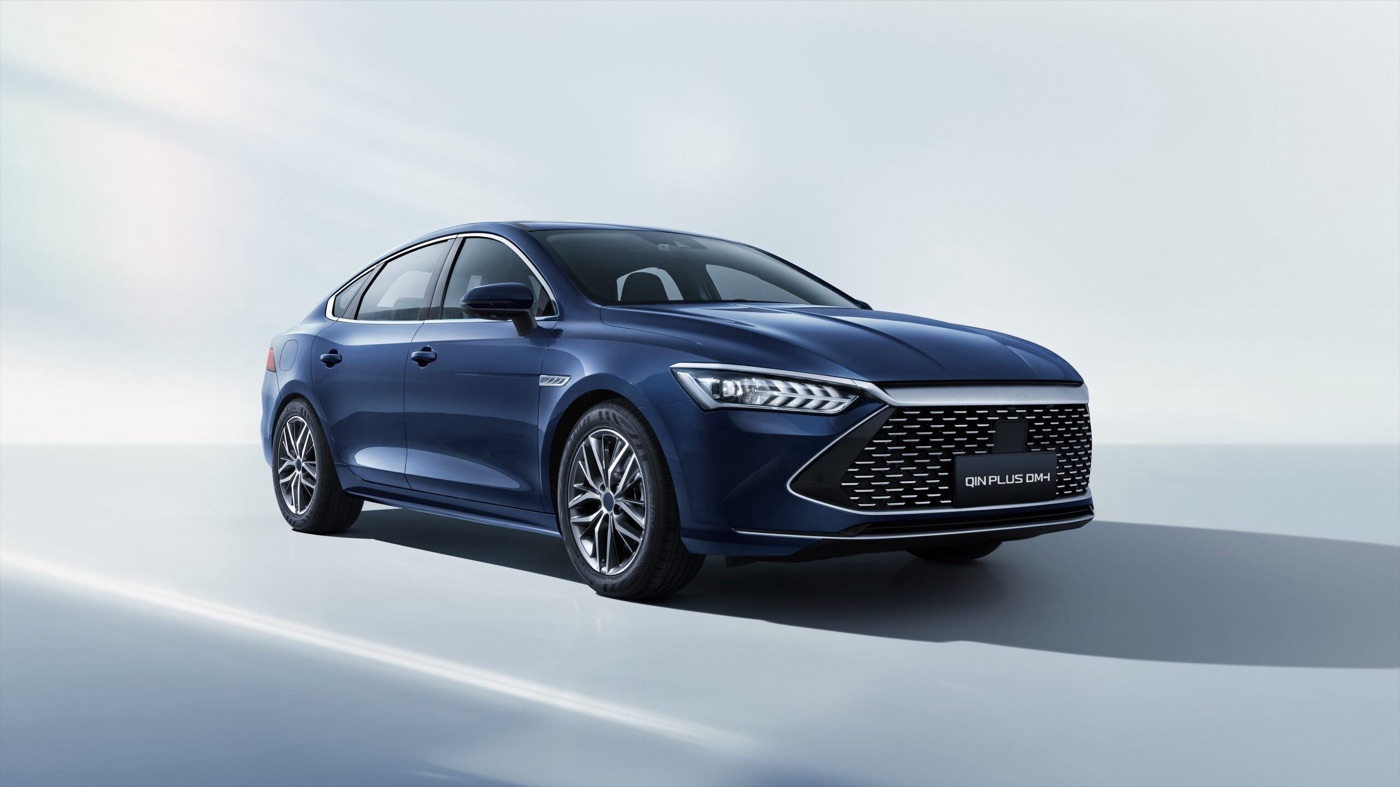
For a BYD Qin Plus in the UAE, choose a dash cam only after confirming three things on your actual car: whether it already has a usable factory recorder, where the windshield driver-assistance camera and sensor housing end, and which low-voltage power source the installer will use. A good add-on camera should have a clearly stated high-temperature operating range, a supercapacitor rather than an unknown lithium battery, a mount that stays bonded in summer heat, and video that can be exported without a cloud subscription. Never let a bracket or cable obstruct the driver’s view, an airbag path or the factory camera area.
Why test Qin Plus dash-cam demand now?
Autosupp’s July 2026 Search Console export recorded 1 click from 6 impressions for “byd qin plus accessories” and 1 click from 1 impression for “dashcam”. The existing Qin Plus accessories hub has also received 314 production-log requests, including 38 from AI-search or crawler user agents, while the site’s UAE dash-cam cluster has received 577 requests, including 142 AI-related requests. This page tests the intersection: whether owners want a Qin Plus-specific camera, heat rating, power and placement guide strongly enough to justify sourcing an installable sample.
This is deliberately a demand test, not an inventory claim. Useful target searches include “BYD Qin Plus dash cam UAE”, “Qin Plus DVR”, “Qin Plus parking camera” and Arabic equivalents. If those queries produce impressions, clicks or owner enquiries, the next step is to inspect one real DM-i and one real EV installation before choosing a SKU.
Check the car before shopping for a camera
Qin Plus cars in the UAE can be private imports from different production years and may be DM-i plug-in hybrids or EVs. Equipment, menus, windshield housings and available low-voltage connections can differ. Start with the car’s VIN, model year and powertrain, then inspect the infotainment menus and the manual supplied with that vehicle. BYD’s official manual download page lists Qin, DM and EV families; use the manual that matches your exact car rather than a seller’s generic screenshot.
- Look for a factory recorder menu: confirm whether it records, whether a memory card is installed and whether files can be exported locally.
- Map the windshield hardware: photograph the mirror base, sensor cover, dotted ceramic area and the clear swept area of the wipers.
- Identify trim and airbags: cable routing must not cross a curtain-airbag deployment path or force an A-pillar clip out of place.
- Find the correct low-voltage diagram: do not guess at a fuse or connect an accessory to the high-voltage traction system.
- Check tint and film: ask the tint installer whether the chosen adhesive pad can be removed without damaging the film.
Factory recorder, USB camera or hardwired kit?
| Route | Best for | Main check |
|---|---|---|
| Existing factory DVR | Cleanest integration when it is present and functional | Verify recording quality, storage, export and language access on your car |
| 12V or USB-powered camera | Reversible installation and simple daily recording | Confirm the outlet switches off correctly and route the visible cable safely |
| Hardwire kit | Parking mode and a tidier installation | Use the correct fuse type, low-voltage cutoff and a qualified installer |
| Mirror-cover integrated camera | Near-OEM appearance | The housing must match the exact mirror and sensor cover, not merely “Qin family” |
| Front-and-rear two-channel kit | Evidence from both directions | Plan the rear cable through trim without crossing airbags or damaging clips |
A camera advertised as “plug and play for Qin Plus” still needs proof. Ask for the connector, bracket and installed view on the same generation and powertrain. An integrated cover that fits a 2026 domestic-market car may not match an earlier import. The safest sample test records the VIN range, photographs every connector and confirms that all driver-assistance warnings remain normal after installation.
What survives UAE parked-cabin heat?
Do not buy on resolution alone. The camera, adhesive, card and power module all sit near hot glass. Require a published operating and storage temperature range from the manufacturer, then compare that range with the conditions in which the car is actually parked. A supercapacitor design is generally preferable for sustained hot-cabin use because it avoids relying on a small rechargeable battery beside the windshield, but the complete camera still needs a credible heat specification.
- Mount: use the supplied automotive pad on clean glass; unknown suction cups and soft adhesive can sag or release.
- Memory card: choose a high-endurance card in a supported capacity and format it through the camera at the maker’s recommended interval.
- Power module: a hardwire kit should state its low-voltage cutoff and be compatible with the vehicle’s 12V system.
- Screen and Wi-Fi: verify that essential settings and file export still work if the app or cloud service becomes unavailable.
- Ventilation: do not bury the camera behind a sunshade or decorative cover that blocks its cooling path.
A reflective UAE windshield sunshade helps protect the parked cabin, but it must not push against the camera or trap it between reflective material and glass. Fit the shade around the installed camera and remove it gently rather than striking the mount each day.
Placement and field-of-view checklist
- Sit in the normal driving position and mark the area hidden behind the mirror, where the camera body is least distracting.
- Keep the lens inside the wiper-swept clear area so rain and dust do not obscure every recording.
- Leave the factory sensor and camera housing unobstructed; do not place a lens, cable or metallic film over that area.
- Power the camera temporarily and inspect the live view before bonding the mount. The bonnet should occupy only a small useful reference area, not half the frame.
- Check that the mount is on clear glass rather than an uneven dot matrix unless the manufacturer supplies a suitable static-cling layer.
- Close all trim carefully after routing. No cable should hang near pedals, steering, airbags or the driver’s sight line.
- Drive a short test route and confirm there are no new warning lights, trim rattles, radio interference or camera reboots.
Choose the channel layout by use case
| Owner use | Sensible layout | Trade-off |
|---|---|---|
| Dubai or Abu Dhabi commute | Quality front camera | Simple and discreet, but no rear view |
| Frequent highway driving | Front and rear | More complete evidence; longer installation |
| Street or open parking | Front/rear with buffered parking mode | Needs a verified low-voltage cutoff and storage planning |
| Ride-hailing or shared use | Cabin channel only after privacy review | Records occupants and creates extra consent and data-handling duties |
| Owner seeking OEM appearance | Exact mirror-cover unit | Highest fitment risk across model years |
For most private owners, a dependable front camera or front-and-rear kit is more useful than a three-channel specification with poor heat tolerance. Night plate capture depends on exposure, motion, lighting and angle, not only “4K” printed on the box. Ask for original daytime and night files, not compressed social-media clips.
Parking mode without draining the 12V battery
Parking mode is not free energy. Motion detection, impact detection and buffered recording all consume low-voltage power. The hardwire kit must cut off at a documented threshold, and the owner should understand how long the car can sit before the camera stops. If the Qin Plus shows a low-voltage warning, behaves unusually after parking or repeatedly resets the camera, disconnect the accessory and have the installation checked.
Do not assume the hybrid or EV traction battery directly powers the camera while parked. Accessory wiring belongs on the correct low-voltage circuit identified for the exact car. An installer should use an add-a-fuse or manufacturer-approved connection where appropriate, preserve the original fuse rating and leave a labelled, reversible installation record.
Recording privacy and responsible use in the UAE
A dash cam can collect faces, number plates, voices and location data. The UAE’s official portal explains that the federal Personal Data Protection Law governs electronic processing of personal data and places duties around confidentiality and privacy. Keep files secure, limit access, avoid recording cabin audio when it is unnecessary and do not publish identifiable footage casually. If footage concerns a collision or offence, preserve the original file and share it through the relevant police, insurer or legal channel. This is practical privacy guidance, not legal advice; check the current rule for your emirate and use case.
Review the official UAE data-protection overview before using a cabin-facing camera or sharing clips online. A visible recording notice and a clear retention policy are especially important for business, fleet or ride-hailing use.
Installation handover: what to test before paying
- The video shows the correct date, time and timezone and can be exported to a second device.
- Both front and rear channels, if fitted, retain footage after an ignition cycle.
- The memory card reports its full supported capacity and loop recording overwrites only unlocked files.
- Parking mode enters and exits correctly, with the cutoff setting written on the invoice.
- No ADAS, airbag, low-voltage or infotainment warning appears.
- The mirror, sun visors, sunshade, wipers and passenger view remain usable.
- The installer provides the fuse position, cable route, app name, default settings and removal method.
The model-specific process mirrors the principles in Autosupp’s Leopard 5 / Denza B5 dash-cam guide, but the bracket, trim and fuse decisions must be rechecked on the Qin Plus. A different BYD model is not fitment proof.
Autosupp availability and next step
Autosupp does not currently claim stock for a BYD Qin Plus dash cam, mirror-cover recorder or hardwire kit. This page tests whether the combined Qin Plus accessory and dash-cam search signals become a real SKU opportunity. Before any listing, Autosupp would need a physical sample, confirmed heat specification, original video files, DM-i/EV fitment checks, a documented low-voltage installation and real installed photos.
For products that are genuinely available now, browse current Autosupp products. For other model-led ideas, use the BYD accessories UAE hub. An honest camera test starts with the exact car and installer, not a copied compatibility list.
Frequently asked questions
Does the BYD Qin Plus already have a built-in dash cam?
Some model years or market specifications may expose a factory recorder or related hardware, while others may not. Check the exact VIN, menus and matching owner manual before buying an add-on camera.
Where should a dash cam go on a Qin Plus windshield?
Usually high behind the rear-view mirror, inside the wiper-swept area and outside the factory sensor housing. Confirm the driver view and camera image before bonding the mount.
Is a supercapacitor dash cam better for UAE heat?
It is generally preferable to a small rechargeable-battery design for sustained hot-cabin use, but the entire camera, mount, card and power kit still need credible operating-temperature specifications.
Can parking mode drain the Qin Plus 12V battery?
Yes. Use a compatible hardwire kit with a documented low-voltage cutoff, record the setting and stop using it if the vehicle shows low-voltage warnings or unusual behaviour.
Can I publish dash-cam footage in the UAE?
Do not publish identifiable footage casually. Secure the files, respect UAE privacy and personal-data rules, and share incident evidence through the relevant police, insurer or legal channel.
Does Autosupp stock a BYD Qin Plus dash cam?
Autosupp does not currently claim Qin Plus dash-cam stock. This guide tests demand before a heat-rated, properly installed sample is considered.