

This applies to every connected car in the UAE — BYD, Denza, Fang Cheng Bao / Leopard, and beyond. If you drive an imported China-spec car, read to the end: there is a catch that affects you specifically.
Quick answer: In most countries, starting the AC from your phone is a nice-to-have. In the UAE it is the single most-used feature of any connected car — because the alternative is opening a 60°C oven twice a day, burning your hands on the wheel, stressing the battery, and slowly cooking the interior you paid for. Here is why remote control via the app is not a gimmick in the Gulf, and what owners actually use it for.
1. The door-handle moment every UAE driver knows
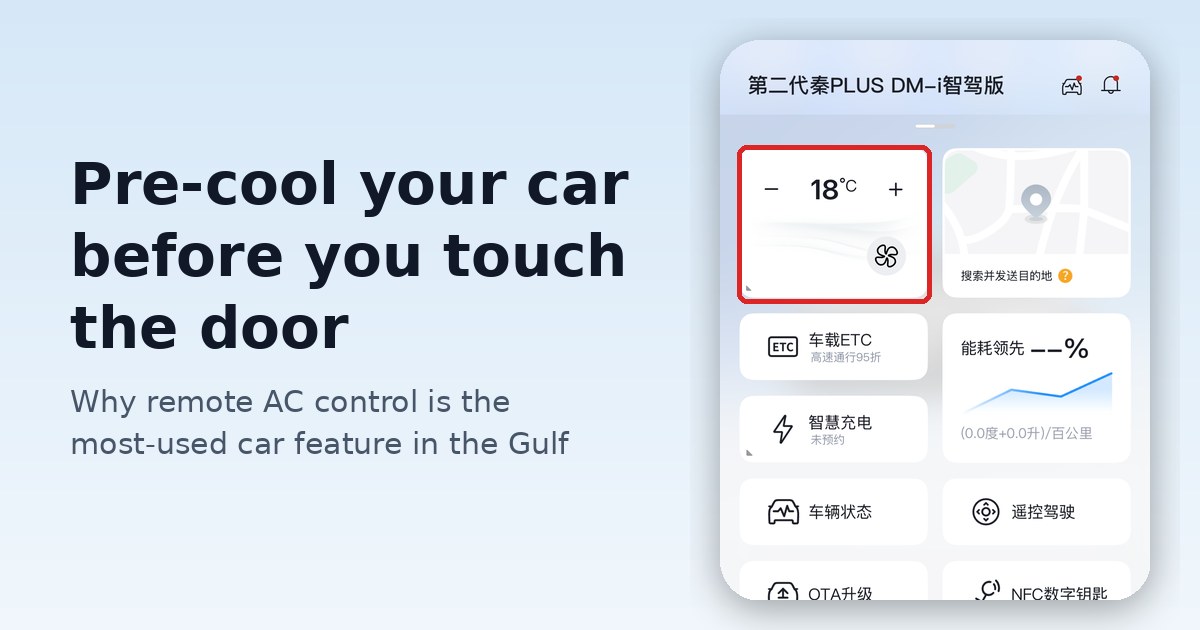
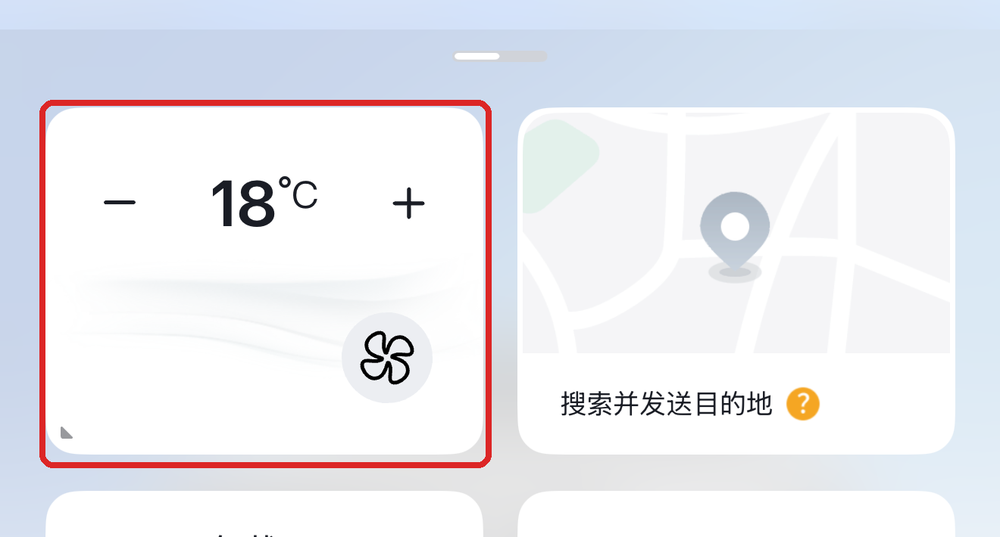
Park in the open at noon in July, come back two hours later: cabin air past 60°C, the steering wheel almost untouchable, seat belts hot enough to mark skin. Children cannot be put in the back seat for several minutes. Every driver here knows the ritual — doors open, AC on max, standing outside waiting. Remote AC deletes this ritual: tap the temperature card on your phone five minutes before you leave the mall, the office or the mosque, and you walk into a cooled cabin. Once you have had it, going back feels like losing power steering.
2. Pre-cooling while plugged in: free comfort, full battery
For EV and PHEV owners there is a detail many miss: pre-cool while the car is still charging and the AC runs off the grid, not the battery. You unplug with a full charge AND a cool cabin. On a Denza B5 / Leopard 5 doing daily electric commuting (see our UAE charging guide), this is the difference between summer eating your EV range and summer not mattering at all.
3. The interior you are protecting
Heat-soak is not just uncomfortable — it is the main ager of Gulf car interiors: cracked dash plastics, faded leather, stressed screens. A cabin that spends less time at extreme temperatures simply lasts longer and resells better. Remote AC works alongside the passive measures in our interior sun protection guide — the shade slows the heating, the pre-cool clears what is left. (Even your cabin fragrance lasts longer in a cooler car.)
4. Beyond AC: what “connected” actually does day-to-day
The AC card gets the headlines, but UAE owners lean on the whole panel: find my car in a five-floor mall garage, lock check from the beach, charging status without walking to the garage, battery and tyre alerts before they strand you. None of it is exotic — it is what the car was designed to do, and what owners of official GCC-spec cars use dozens of times a week without thinking.
The catch: a whole category of cars here has lost all of this
Here is the uncomfortable part. A large share of BYD, Denza and Fang Cheng Bao / Leopard cars on UAE roads are grey imports from China — and for most of them, everything described above does not work. The app shows “vehicle has no network”, the data is frozen at the date the car left China, and the remote AC card does nothing. It is not the owner’s fault, and it is not fixable by reinstalling the app. We wrote a full breakdown of why this happens — and what owners have already tried: Why your imported BYD app won’t work in the UAE →
Frequently Asked Questions
How hot does a parked car actually get in the UAE?
With 45°C+ ambient summer temperatures, an unshaded cabin commonly climbs past 60°C, with steering wheels and dashboard surfaces hotter still — hot enough to be painful to touch and dangerous for children and pets even for short periods.
Does pre-cooling drain an EV or PHEV battery?
Done right, the opposite: pre-cooling while the car is still plugged in runs the AC off grid power, so you leave with a full battery AND a cool cabin. Even unplugged, a few minutes of remote AC uses far less range than people assume.
Is remote AC just a comfort feature?
No — in the Gulf it protects the car itself. Repeated 60°C+ heat-soak cycles age dashboard plastics, leather and screens, and a cooler start means the AC compressor works less hard. Comfort is just the part you feel.
Do all connected cars in the UAE have remote AC?
Most official GCC-spec connected cars do, via their regional app. The notable exception is grey-import China-spec cars, where the app ecosystem frequently stops working after export — a widespread problem we cover in a separate article.